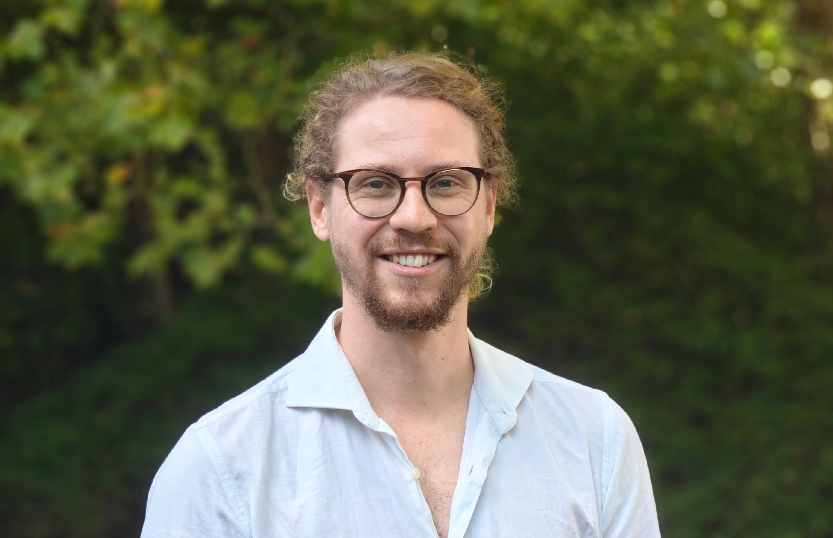
Hannes Mareen
IDLab-MEDIA, Ghent University–imec, Belgium
HowAI-Based Regeneration Reshapes Multimedia Forensics
Abstract
Diffusion models are widely known for generating new images from text, but their capabilities extend much further, into restoration, enhancement, editing, and compression. These AI tools unlock impressive creative and technical possibilities, but also blur the line between real and synthetic content, posing new challenges for multimedia forensics. AI-based compression may appear content-preserving, yet it can subtly alter image semantics. This poses serious risks, for instance, when analyzing sensitive material such as surveillance footage. Moreover, such processing can introduce artifacts resembling those of generative models, meaning authentic media might be incorrectly flagged as synthetic. Even more disruptive, diffusion-based regeneration can erase forensic traces used for watermarking, deepfake detection, or image forgery localization. This can occur intentionally in targeted attacks or unintentionally through image processing such as super-resolution. Finally, current image forgery localization methods fail to localize edits performed by new AI-based inpainting methods because they fully regenerate the edited images. As AI-based regeneration becomes embedded in everyday media workflows, multimedia forensics must evolve to safeguard trust in visual evidence in the era of generative AI. Future research could explore automated detection of miscompressions, detection of a media’s processing history, and forensic methods robust to laundering.
Biography
Hannes Mareen is a postdoctoral researcher at IDLab-MEDIA, Ghent University–imec, Belgium. He completed his Bachelor’s, Master’s, and PhD in Computer Science Engineering at the same university in 2014, 2017, and 2021, respectively. Hannes specializes in multimedia forensics, security, compression, and related applications. Within forensics, he has contributed to work on deepfake image detection, perceptual hashing, video watermarking, and more. For example, he contributed to the COM-PRESS Image Manipulation Analysis Dashboard for fact-checkers, the Comprint method for image forgery localization, and the TGIF dataset of text-guided inpainted images. He was an Organizing Committee member for a challenge at MediaEval 2025 and 2026, Publication Chair at IEEE GEM 2024, and a TPC member for an IEEE ICIP 2026 workshop and IEEE GEM 2024 and 2025.
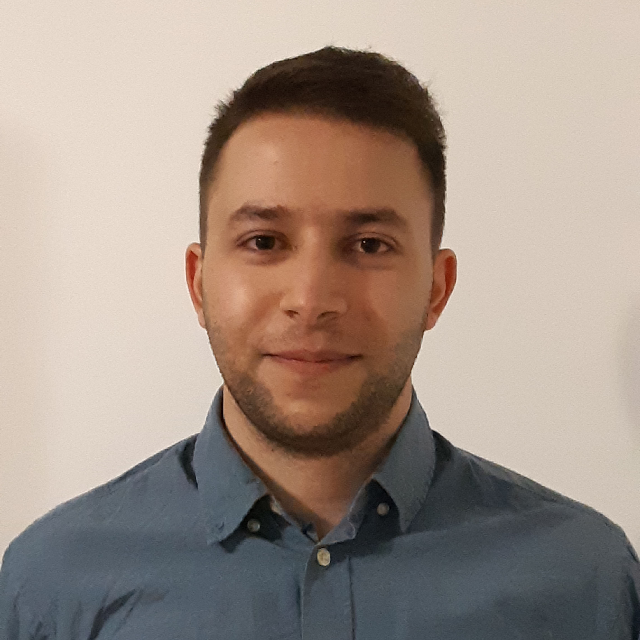
Dimitar Dimitrov
Sofia University “St. Kliment Ohridski”, Bulgaria
When Memes Manipulate: Multimodal Tools of Disinformation
Abstract
Memes are often viewed as jokes or simple internet humor, but they have become highly effective tools for shaping opinions, framing public debate, and spreading manipulative narratives during major political and social events. This talk explores the role of memes within today’s information disorder ecosystem, focusing on how they combine images, text, and cultural references to communicate ideas quickly and emotionally, often in subtle ways. These same characteristics also make memes particularly challenging to analyze computationally.
Building on this perspective, the talk presents recent research on persuasion techniques in memes, followed by selected work on harmful and disinformation-related meme analysis. It concludes by discussing recent advances in unified multilingual and multitask vision-language models for meme understanding, motivated by the need to move beyond isolated datasets and narrowly specialized detection systems toward more generalizable and context-aware multimodal reasoning.
Biography
Dimitar Dimitrov is a final-year PhD candidate at Sofia University “St. Kliment Ohridski” and is expected to defend his dissertation in 2026. His research focuses on disinformation, multimodal systems, and the intersection of language and visual understanding for online content analysis. He is currently a researcher in the EU SUMMIT Project, where his work centers on disinformation detection and multimodal content analysis. In parallel, he teaches practical courses in Information Retrieval and Natural Language Processing at Sofia University.He has co-organized numerous international shared tasks and evaluation campaigns in the areas of persuasion analysis, multimodal reasoning, and narrative detection. These include SemEval 2021 Task 6, SemEval 2024 Task 4, SemEval 2025 Task 10 on Entity Framing and Narratives, CLEF 2024 CheckThat! Tasks 2, 3, and 4, the SlavicNLP 2025 Shared Task on Persuasion in Parliamentary Debates, CLEF 2025 ImageCLEF Multimodal Reasoning, CLEF 2026 FinMMEval, and the second edition of CLEF 2026 ImageCLEF Multimodal Reasoning. His work contributes to advancing evaluation benchmarks and community resources for multimodal disinformation analysis and computational propaganda research.